

Differences in Egg Labels
By: Christine Dang
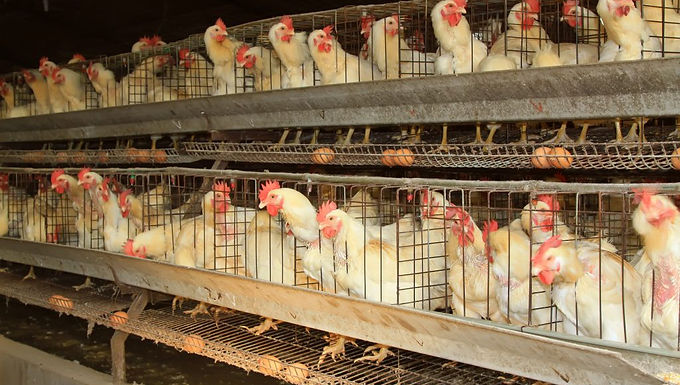
Chicken eggs are boxed in a variety of egg cartons with all different kinds of labels on each carton, and distributed into supermarkets. The various labels on egg cartons may look appealing, but do they truly reflect the welfare of the laying hens? By understanding the definition of these labels, it can give insight into the living conditions, including access to the outdoors, roaming space, and feed, of the laying hens. The environment often has a direct impact on the quality, nutritional value, and taste, but not necessarily price, of the eggs.
In Canada, there are five different types of egg productions based on housing systems for hens (listed from worst to best egg productions).
1. Conventional: The worst type of egg production and housing system for hens, it provides extremely limited space per hen as each hen is confined into a wire cage, tightly connected to each other. They are provided with minimal feed and water, without any enrichment for them. Conventional cages tend to be the cheapest and inexpensive option in groceries. However, this cost affects the hens overall well-fare. Their movements are strictly prohibited, as well as the horrible conditions they are met with, including expressing their natural behaviours. Examples of their natural behaviour are perching, scratching, dustbathing and nesting, actions that are all prevented because of the housing systems. These eggs usually have no specific label on the carton about hen housing.
2. Enrichment: This kind of label, educates us that the cages are slightly bigger for more hens to fit into one, with some features that are equipped to make the hens more comfortable. That includes nest boxes, perches and scratch pads to peck at. Although this may be considered a better option than conventional, it still restricts most movement from hens and limits them from expressing natural behaviour. These eggs might have a label on the carton about hen housing.
3. Free-run: Chickens are not locked in cages in free-run housing systems. Instead they are put loose into the barn where they are able to roam around the confined space. Enrichments, such as perches and litter, are provided to encourage natural behaviours of perching, scratching, and dustbathing. They’re also provided with nest areas where they can lay their eggs.
4. Free-range: Free-range chickens must have access to the outdoors, but this is only required during their laying cycle. However, Certified Humane Free Range standards are more strict. These hens must be outdoors for at least six hours a day (weather permitting) and have access to at least two square feet of roaming space per bird. Because Canada’s winters are long, outdoor access is often seasonal. There is no legal definition of “free‑range” in Canada, so the amount of outdoor time can vary
5. Organic: Organic eggs come from free‑range hens raised according to the Canadian Organic Standards. These chickens are allowed to have indoor and outdoor space, with continuous outdoor access for about 1/3 of their life. Farmers are forced to protect the chicken area from predators and weather conditions. They are required to also feed the chickens with natural enrichments. Organic eggs come from hens fed a strictly regulated organic, non-GMO diet and raised with outdoor access, antibiotics-free. Unlike conventional farming, these eggs are guaranteed to be free of synthetic pesticides, chemical fertilizers, and routine medications.
6. Pasture-raised: These types of eggs are often the most expensive option in groceries.
These eggs tend to be more expensive, but for a good reason: Hens that spend the majority of their life on pasture, defined as "land having rooted vegetative cover, grasses or plants," distinguishing it from “free-range,” which only mandates outdoor access. Pasture-raised eggs contain over twice the amount of omega-3, vitamin D, vitamin E.