

From Capitalizing on Women's Insecurities to Costing Them Thousands: The Pink Tax
By Akila Shridhar
In a society built on the belief of “by the people, for the people, and of the people” why is it that a woman spends $2,381 more annually than a man for the same products and amenities? Or the fact that condoms and erectile dysfunction pills are exempted from taxes yet period products, which are basic necessities and items everyone who menstruates is entitled to, are still taxed. This is simply due to the fact that this society that claimed to be “for the people” was also one designed by a man for the needs of other men, and no matter how many centuries have passed, it seems that as a society we are beginning to repeat the mistakes we strived to eradicate.
What is the “Pink Tax”?:
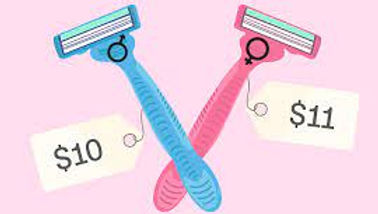
Picture a pack of disposable razors at one's local store. Both would be from the same brand, made out of the materials, same packaging, the same amount of razors, and the same number of blades on the razors, even down to the exact measurements of the width and height. The only difference is one pack is pink and the other is blue but regardless of the difference in colour, most would still think they would cost the same price. Wrong. The pink pack would still end up costing a dollar more. This is what is known as the pink tax. The pink tax, a name sexist in itself, is a charge/tax added on top of products directed toward females which not only has an impact on our economy but costs the lives of 3,905 million women around the world, and it is not only razors which are sold using this scheme.
According to a study of gender pricing in New York City, women and girls tend to pay about 7% more for products ranging from toys to clothes to personal care (Elsesser), and even though the idea of simply making products the same price regardless of their targeted gender seems like the best solution, it is not as simple as it seems. The main reason for the pink tax is that companies know there are specific products directed toward women that they are willing to invest in. If companies were to remove this additional cost, not only would public revenue face a huge loss but this would lead to increased tax rates on other items as well. If New York per se eliminated the pink tax it would reduce their annual revenue by $14 million (Rodriguez).
The Tampon Tax:
One item the pink tax significantly impacts is menstrual products, hence the fact it is also known as the “tampon/period tax.” Due to menstrual items being taxed as non-essential items, the average person who menstruates spends around $1,773 on period products during their lifetime. To put it in perspective, approximately 26% of our population is on their period every day, which equates to around 800 million people, and since most women begin their period at the age of 10-16 with it lasting for around half their life; these are prices many cannot afford. With more than 12.8% of women and girls living in poverty, they already cannot afford basic needs and they are forced to spend on menstrual products due to the lack of available sanitary products and facilities. What makes this even harder is that women are paid 83.7% of what men are paid and it makes it difficult to afford these necessities (Chun-Hoon).
The Issue with the Easy Way Out:
With around 7% of all countries being the only ones to exempt tax on period products there is a long way to go before the issue with the pink tax finally ends, and even if legally it is put to a stop there are numerous ways companies can get around it without getting caught. For instance on January 1, 2023, California made it illegal to increase the price of products directed towards females that are similar to products made specifically for men with the law directly prohibiting "charging a different price for any two goods that are substantially similar, if those goods are priced differently based on the gender of the individuals for whom the goods are marketed and intended." (Elesser). Not only that but, the requirements must be that two items must serve the same function, use similar materials, have similar designs and qualities, and be branded or owned by the same company which in hindsight is quite vague.
While it is a small step in the right direction and can spread awareness to help end this issue, it is not the be all, end all of the companies that profit from the pink tax. Liz Grauerholz, a sociology professor at the University of Central Florida who researches the pink tax states: "It is almost impossible to make a side-by-side comparison. And I honestly believe that manufacturers have gotten pretty wise to the pink tax, so they make them [men's and women's items] look like completely different products to make those side-by-side comparisons really difficult."
What Can We Do?:
While it might take years or even decades before female and male products begin to be priced at the same rate, there are various ways that cannot only save money but spread awareness. With various protests, petitions, and posts all regarding the fight to end discrimination against women or even the pink tax specifically; it is important to shed light on this matter as many may not be aware of how they are putting money directly into the pockets of our government. Even simply supporting brands that do not use pink tax such as Billie, a women's razor company hoping to end pink tax, cannot only spread awareness but may inspire other companies too. As far as the tampon tax goes, while some countries such as Canada have exempted it, it is still hard to find affordable sanitary products in some parts of the world. One of the best alternatives is menstrual cups as not only have they been on the rise lately due to their sustainability but how they could save one year's worth of money. Ending period poverty entails more than just affordable menstrual hygiene products; it involves education, proper water and sanitation facilities, and addressing gender norms. If the government recognizes the necessity for menstrual products, we will be one step closer to ensuring that the lack of resources to manage menstruation is not what prevents women from reaching their full potential.
Despite being the ones who have to pay the pink tax, women are the ones leading the charge to end it and it is not long before we can rewrite our history for the present, but the future as well.